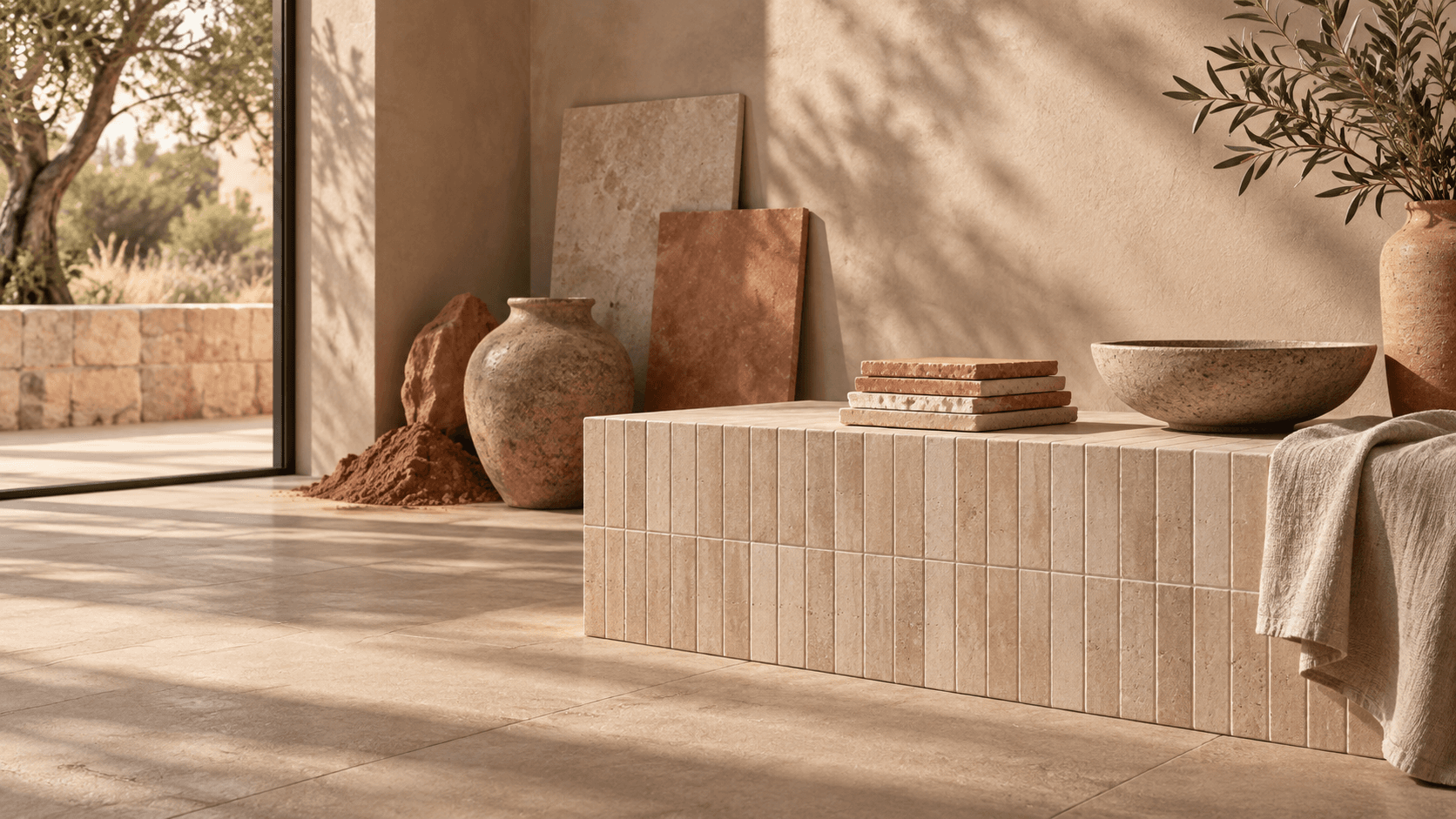
Some of the world's most remarkable materials began with the simplest ingredients. Long before tiles became a specification staple in Architecture and Interior Design, they started life as little more than earth and water. Yet over thousands of years, that mixture evolved into one of the most enduring materials used in the built environment. This National Tile Day, we're celebrating the extraordinary journey of tile.
Every tile tells a story, and it starts with clay.
The story of ceramic begins with one of the world's most accessible natural materials. Thousands of years ago, early civilisations shaped clay by hand, harnessing its versatility to create pathways, structures and places of gathering. As societies evolved, so too did the use of clay. Its durability, workability and enduring appeal allowed it to transcend pure function, becoming a material of both performance and design. From these early innovations emerged the ceramic surfaces we know today, a timeless material that has remained integral to architecture.
From Function to Art Form
As ancient civilisations developed new ways of working with clay, tile moved beyond pure practicality. The introduction of firing transformed the material, creating surfaces that were stronger, longer lasting and capable of withstanding the demands of everyday life. With greater durability came greater opportunity for creativity. Architects, builders and craftspeople began incorporating colour, pattern and decoration into their designs. What had once been a simple building component became a medium for expression, bringing character and identity to palaces, temples, civic buildings and places of worship.
An Enduring Presence in Architecture
Few materials can claim such a long and continuous relationship with the built environment. Across centuries, tiles have appeared in some of the most significant architectural achievements, adapted by different cultures, reimagined through changing styles and embraced by successive generations of designers. From decorative facades and intricate mosaics to contemporary large-format surfaces, tile has constantly evolved while remaining true to the qualities that made it valuable in the first place. Beauty. Versatility. Longevity.
Built to Last
Perhaps the most remarkable part of tile's story is that it is still being told by the buildings themselves. Many historic tiled surfaces have survived for centuries, despite exposure to weather, changing environments and time. Their continued presence offers a powerful reminder of the material's durability and enduring appeal. In an industry increasingly focused on creating spaces that last, tiles remain a compelling example of how thoughtful material choices can deliver both performance and design impact.
A Material for Every Era
Today's tiles are manufactured using advanced technologies, innovative surface finishes and sophisticated production techniques, but the principle remains much the same as it was thousands of years ago. Natural materials are transformed through craft, expertise and innovation into surfaces that enhance the spaces we experience every day. While styles, formats and applications continue to evolve, the tile's role in architecture remains unchanged: to combine functionality with beauty in a way few materials can.
Celebrating National Tile Day
From its origins in the earth beneath our feet to its place in today's most inspiring architectural projects, tiles have travelled through history. For more than 5,500 years it has adapted, evolved and endured. While its story began with clay, it continues to shape some of the most beautiful spaces in the world. This National Tile Day, that's something worth celebrating.

