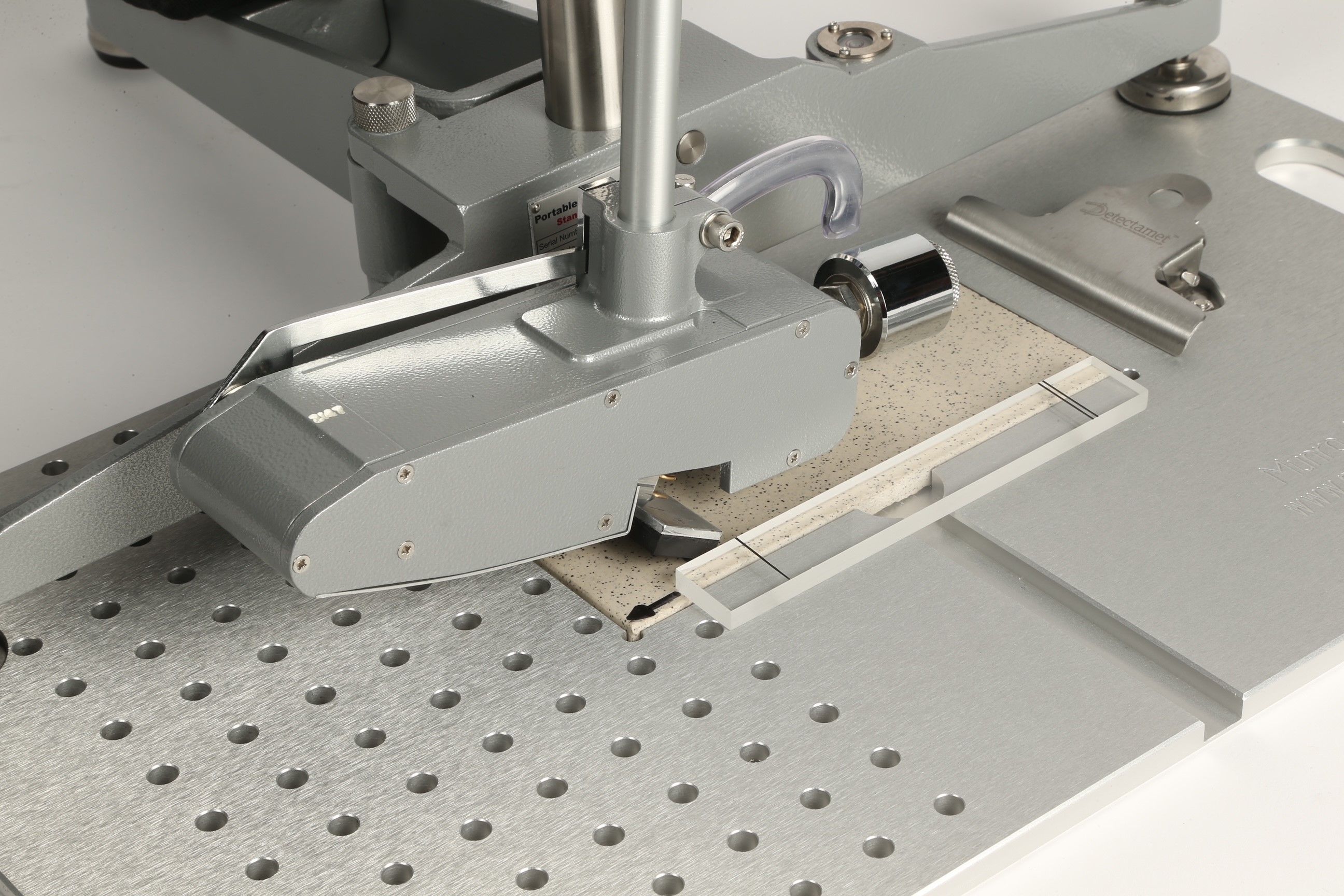


How do we assign a rating for slip-resistant tiles?
During testing, the Pendulum machine will record results for each tile in wet and dry environments, simulating shod foot (slider 96) and barefoot (slider 55) conditions. The higher the recorded value, the greater the slip resistance.
The following table represents the pendulum test values and how that translates to slip resistance:
0 - 24 Low
25 - 35 Moderate
36+ High
While all tiles have some slip resistant properties and can be categorised into low, moderate and high slip resistance, at Parkside we only classify a tile as high slip resistance if it has achieved a PTV rating of 36+ in shod foot (96) wet conditions. This means that these tiles have low slip potential, to give you peace of mind when specifying. A value of 36+ is regarded as a slip resistant tile and indicates a probability of one in a million chance of slip on a horizontal surface.
However, the test values may be affected by the installation and maintenance processes due to the following factors:
- Abrasive action of the grouting process
- Build-up of residues
- Incorrect application of sealants.
It is important that tiles are cleaned and maintained correctly to ensure that slip resistant values are maintained over time.
Sloping Surface
When walking on a slope, a higher level of slip resistance is required than on a flat surface to achieve the same degree of safety. A surface with a 1-degree slope will be required to be +38 PTV and a surface with a 5-degree slope will be required to be +45 PTV.