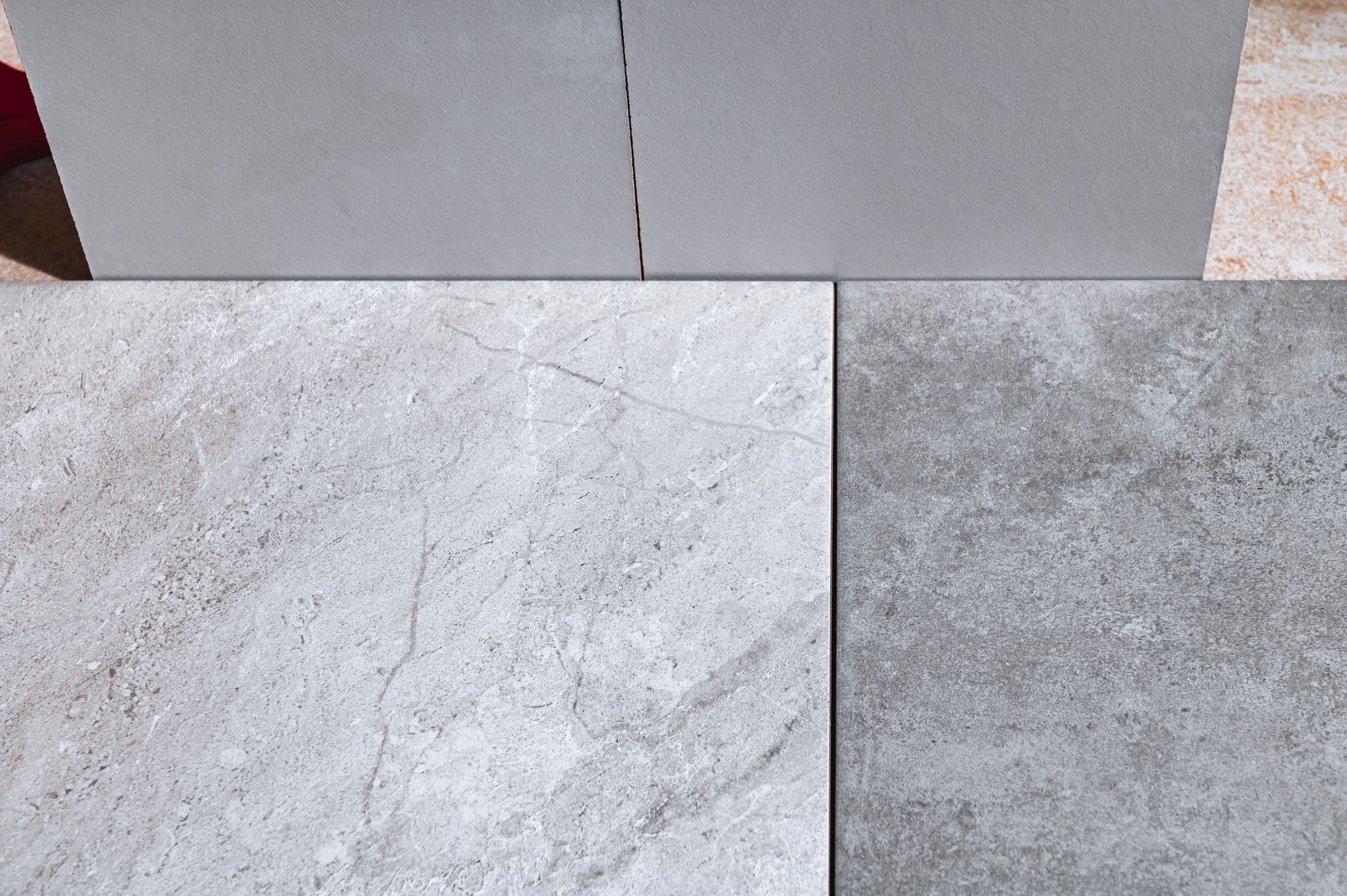
Porcelain tiles are a very popular choice within domestic and commercial tiling projects.
While their aesthetic properties have widespread appeal, one of the biggest concerns of choosing porcelain tiles is whether they will result in slips and trips. For this reason, queries such as ‘are porcelain tiles slippery?’ are very commonly asked.
At Parkside, we provide technician tile specifications to commercial installers, including to ensure the risk of slips on floor surfaces is reduced as much as is feasibly possible.
Whether you are looking to install porcelain tiles inside or outside, this is our guide to avoiding choosing the wrong tile for the job where the slipperiness of the tile is concerned.
Are Porcelain Tiles Slippery?: The Definitive Answer
Let’s cut right to it: Porcelain tiles shouldn’t be slippery. At least, not in the sense that the tile feels dangerous to walk on due to a very obvious lack of grip underfoot. However, it can certainly seem that way when the wrong type of porcelain tile has been chosen based on the installation environment.
Since commercial tiles have to be carefully specified (including for slip-resistance), it is more common to find an unsuitable choice of tile in domestic installations. For instance, 'slippery' porcelain tiles installed in residential bathrooms or in gardens, especially if the homeowner didn’t receive any professional help or advice when buying their tiles online.
However, as we’ve just touched upon, the main issue is not the use of porcelain in itself. Rather, that if the porcelain tile is not correctly specified for its environment. If a tile isn’t properly specified, it may also result in many other performance issues besides a lack of slip-resistance.
In some cases, inadequate cleaning or maintenance of the surface can further contribute towards how slippery porcelain tiles become, especially when used in wet areas.
It's important to note that there is no such thing as a ‘non-slip tile’ whether in regard to porcelain or any other material. But, there is such a thing as choosing a tile which doesn’t have the required properties to reduce the likelihood of slips and trips as much as is feasibly expected based on where the tile has been installed.
For example, installing a glossy porcelain wall tile around an outdoor swimming pool. It sounds like something that is too far-fetched to happen in real life, but if a tile isn’t professionally specified and installed, this greatly increases the chances of such an event from becoming a reality.
Hence, we mention ‘specification’ many times in this blog, in relation to assessing the required technical performance of a tile on a professional level before it is installed.
What Makes A Tile Slippery?
Slip risk on any hard floor surface is determined by the amount of friction between the sole of a shoe (or a bare foot) and the surface underfoot. That friction is influenced by the texture and profile of the tile surface, as well as the presence of any substance between the foot and the tile.
Water is the most common culprit for increasing slipperiness, but soap, oils and cleaning products can all reduce friction and increase slip risk in the same way.
Also, a tile that is perfectly safe when dry can become significantly more slippery when wet. This is why slip resistance is always tested and rated in wet conditions for any tile intended for use in bathrooms, kitchens or external areas.
For commercial tiling installations, specifying the slip resistance of the tile is a very important requirement. But, it can be equally useful to understand what slip ratings mean for porcelain tiles installed in residential settings, especially where reducing potential safety hazards is concerned.
The Role of The Surface Finish In Improving Slip-Resistance

The finish of a porcelain tile is the single biggest factor in determining how slippery it is.
Porcelain is produced in a wide range of surface finishes, and each they behave very differently underfoot:
Polished porcelain is the finish most associated with slipperiness. The polishing process creates a highly reflective, smooth surface that looks luxurious but offers very little friction, particularly when wet. Polished porcelain on a bathroom or kitchen floor is a genuine slip hazard and should be avoided in any area where water is likely to reach the floor. It is best reserved for walls, or for dry floor areas where the risk is managed.
Matt porcelain offers significantly better slip resistance than polished. The surface texture provides more friction, and most matt porcelain floor tiles are rated to an acceptable slip resistance standard for domestic and many commercial applications. That said, matt does not automatically mean safe. Instead, the specific PTV (Pendulum Test Value) of the tile should still be checked for wet area applications.
Textured and structured porcelain including tiles with a stone, slate or wood-effect surface profile typically offers the best slip resistance of all porcelain finishes. The surface texture functions in the same way as the grain on natural stone, creating friction even when wet. These finishes are the standard choice for bathrooms, kitchens and outdoor patio tiles.
Lappato and satin finishes sit between polished and matt. They have a subtle sheen without the full reflectivity of a polished tile. Slip resistance is better than polished but generally not as reliable as a true matt or textured finish in wet conditions. These finishes are best suited to lower-risk floor areas or walls.
Shop the look:
What Information To Check When Purchasing Porcelain Tiles

Choosing the right porcelain tile can look very different depending on whether you are buying the tiles to install in your home or within a commercial setting.
The risk of slips and trips is important to consider with all tiling projects. However, commercial tiling projects also need to consider all of the potential safety, legal and regulatory consequences of specifying the wrong tile, especially if there is a risk to employees or the general public.
Start With the Technical Datasheet
Every porcelain tile from a reputable manufacturer should come with a technical datasheet. This is an official document that sets out the measured performance characteristics of the tile across a range of parameters. Slip resistance data should appear on this document.
If a supplier cannot provide a technical datasheet, or if the datasheet does not include slip resistance values, that is a significant red flag for any floor tile purchase.
The datasheet may be available directly from the supplier, from the manufacturer's website or on request. For commercial projects, always obtain the datasheet before specifying.
The Pendulum Test Value (PTV)
The most important slip resistance figure to look for on a UK tile purchase is the Pendulum Test Value (PTV), measured under the BS 7976 standard. This is the primary method used by the Health & Safety Executive to assess floor slip risk, and it is the figure that matters most for compliance in both domestic and commercial settings.
The PTV scale works as follows:
- 36 and above: Low slip risk (the minimum acceptable for wet floor areas)
- 24 to 35: Moderate slip risk (amber zone - acceptable for dry areas only)
- Below 24: High slip risk (not suitable for floor use in most settings)
When checking PTV, always confirm that the value quoted is the wet result, not the dry result. Dry PTV values are almost always higher and tell you very little about how the tile will perform in the conditions that matter. A tile listed as "PTV 45" without qualification may be a dry measurement. Therefore, ensure you ask specifically for the wet PTV.
Also check which slider was used for the test. The standard test uses a Four S rubber slider for shod conditions. Some manufacturers also provide results using a TRL slider, which better represents barefoot conditions. For bathrooms, changing rooms and any barefoot wet area, the TRL slider result is the more relevant figure.
The R-Rating (Ramp Test)
The R-rating comes from a different test methodology (the ramp test (DIN 51130). It is more commonly seen on tiles intended for commercial, industrial or heavily contaminated floor environments. The scale runs from R9 to R13:
- R9: Suitable for dry or lightly wet conditions
- R10: Suitable for wet conditions with footwear
- R11: Suitable for wet conditions with some contamination; recommended minimum for outdoor use
- R12 and R13: Suitable for heavily contaminated environments such as commercial kitchens with oils and fats
For a domestic bathroom or kitchen, an R-rating may not always be present on the datasheet. Instead, the PTV is the more standard figure for these applications. For outdoor patio tiles, both figures are useful, and R11 is a sensible minimum. For commercial kitchen floors, the R-rating is the critical specification and PTV alone is insufficient.
It is worth noting that R-ratings and PTV values are not directly interchangeable. They measure different things under different conditions, and a tile should not be assumed to meet one standard simply because it meets the other.
Commercial Porcelain Tiles - The Questions To Ask Your Supplier
What is the wet PTV value for this tile? This is the single most important question. If the supplier cannot answer it or does not have the datasheet to hand, request it before purchasing.
Was the PTV measured using the Four S slider or the TRL slider? For barefoot wet areas, the TRL result is more relevant. For shod wet areas, the Four S result is the standard.
Does the tile carry a DIN 51097 classification? For bathroom floors, shower trays and wet rooms, this confirms suitability for barefoot wet use specifically.
Does the tile carry an R-rating? For outdoor use or commercial environments, this is an important additional data point.
Is the slip resistance figure from independent testing or self-certification? Independently tested and certified values from a UKAS-accredited laboratory carry more weight than manufacturer self-certification, particularly for commercial projects.
Porcelain Tiles in Bathrooms: Getting It Right

The bathroom is where most domestic slip concerns arise, and where the finish selection decision matters most.
As a general rule:
- Avoid polished porcelain on bathroom floors as the wet slip risk is too high for most domestic settings
- Choose matt or textured porcelain rated PTV 36+ wet for bathroom floors
- Polished porcelain works well on bathroom walls as the slip risk is irrelevant on a vertical surface, and the reflective quality enhances light in what are often smaller spaces
- Shower trays and wet room floors require the highest slip resistance specification so look for tiles rated to DIN 51097 Class B or C for barefoot wet use
Discover: Porcelain shower trays from Parkside with a +36 PTV finish
Why Porcelain Tiles Advertised As ‘Non-Slip’ Is Problematic
Given the concern over the slipperiness of porcelain tiles, it is common to see some porcelain marketed as being ‘non-slip’, especially in domestic retail environments.
Unfortunately, the term ‘non-slip’ is one of the most misleading descriptions in the tile industry. Regardless of whether your project is residential or commercial, it's worth treating any tile marketed on the basis of being ‘non-slip’ with a degree of scepticism.
Strictly speaking, no tile is non-slip, as every hard floor surface will become slippery under the right combination of contamination, footwear and conditions.
The problem with ‘non-slip’ as a marketing claim is that it implies an absolute quality that doesn't exist. It also gives no indication of the actual measured slip resistance of the tile, and provides nothing useful to a specifier, contractor or consumer trying to make an informed decision.
For commercial projects especially, a ‘non-slip’ label carries no regulatory weight whatsoever. Instead, the Health & Safety Executive and building regulations require actual PTV values, not marketing descriptions.
Even for domestic buyers, it creates a false sense of security that can lead to genuinely dangerous tile selections, particularly in bathrooms and on external surfaces.
What to look for instead: The only meaningful slip resistance information is a wet PTV value, an R-rating where relevant and a DIN 51097 classification for barefoot wet areas.
Get Specification Advice For A Commercial Porcelain Tile Installation
Parkside works with architects, designers and similar professionals involved in commercial tiling projects.
We not only supply porcelain tiles for commercial use, but we also offer technical advice to ensure every tile is correctly specified for your project.
On our website, you’ll find all of our porcelain floor and wall tiles, including porcelain tiles that are specified for interior or external use.
To discuss your commercial porcelain tile requirements with our experts, please send us a message or call us on 0116 276 2532.
Our porcelain tiles are also available to view in person at our studios based in Glasgow, Leicester, London and Manchester.

