Translating the story into surfaces
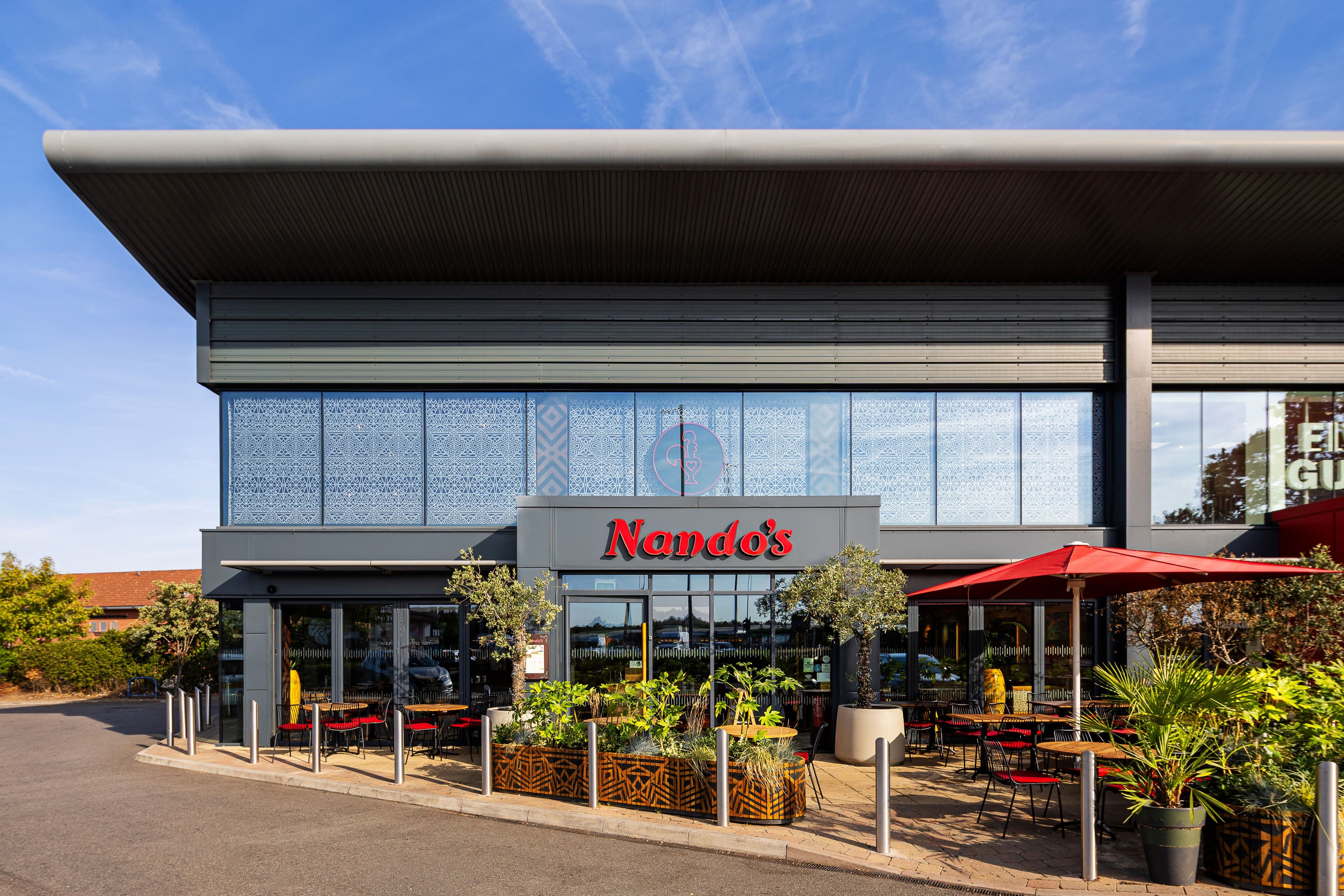
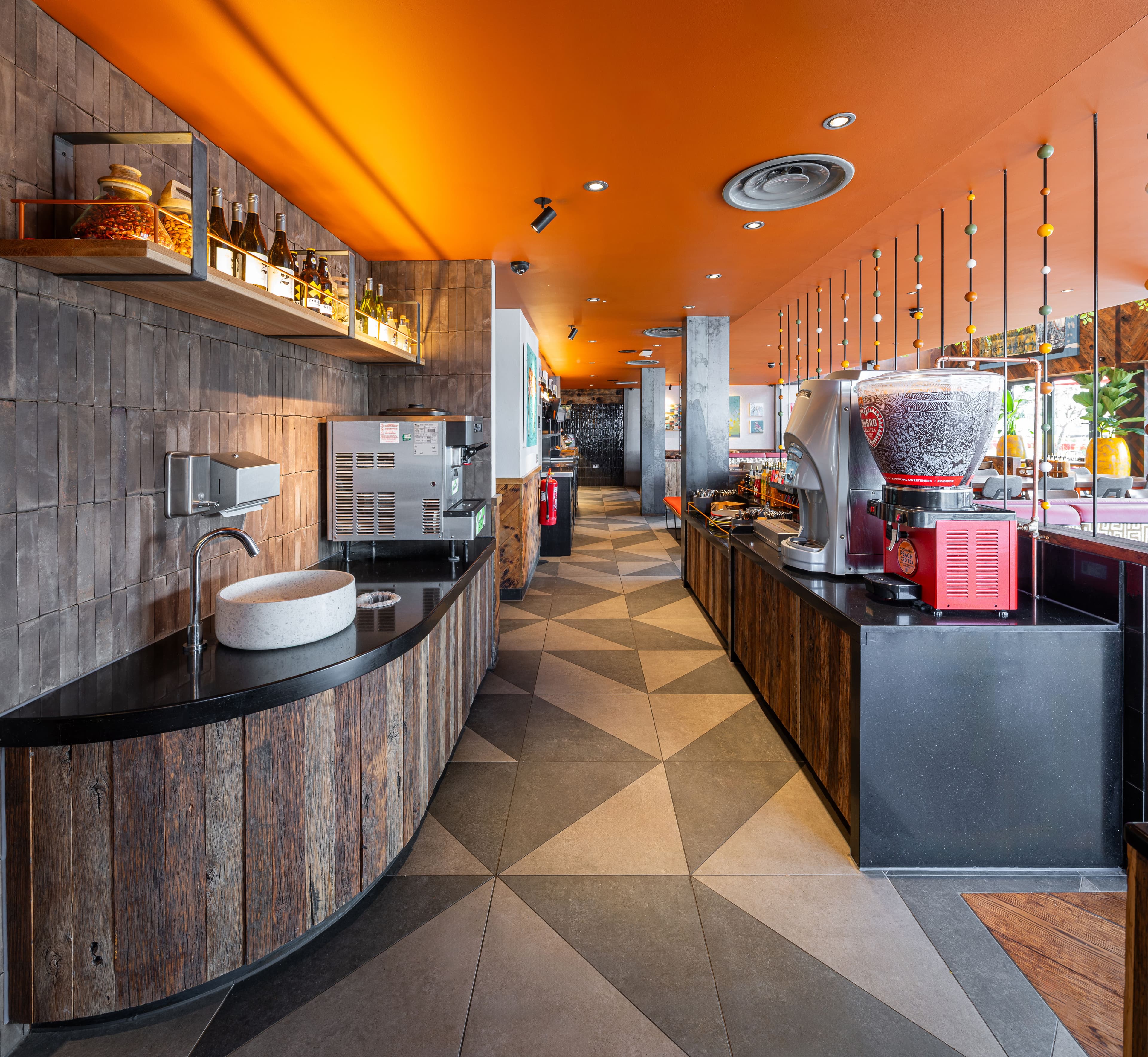
Inspired by the colours of a South African sunset, Harrison’s design brings together fiery terracotta tones, softer greens and contrasting geometric patterns. Warm surfaces and planting create an inviting backdrop, while patterned floors, fixed seating and a hand-painted South African-inspired wall feature introduce rhythm and personality.
Parkside supplied tiles for the main restaurant, kitchen and washrooms, continuing our longstanding relationship with Nando’s. Our role extended beyond product supply: working with the wider project team, we also provided specialist fabrication to help translate the scheme’s more detailed geometric elements into accurately cut tile components.
Selected materials included Coffee and Liquorice tiles, both in 597 × 597 × 9mm; Velluccia Earth Natural in 600 × 600 × 10mm; and Lenton Liquorice at 60 × 240 × 10mm. Their contrasting tones, textures and proportions contribute to the layered palette while supporting the visual connections between the restaurant’s customer-facing and operational spaces.
Why waterjet cutting?
Conventional tile cutting works well for straight cuts and many standard installation details. More intricate patterns, curves, angles and internal corners, however, can demand a greater level of control.
Waterjet cutting uses a highly pressurised stream of water, combined with an abrasive for hard materials such as porcelain, to follow a digitally controlled cutting path. Because it is a cold-cutting process, it does not introduce a heat-affected zone into the material. Its narrow cutting path also makes it suitable for detailed shapes and close-fitting components.
For architects and interior designers, this opens up possibilities beyond standard tile formats. Individual pieces can be cut to form:
- Bespoke geometric floor patterns
- Curves, arcs and irregular forms
- Insets, motifs and contrasting material combinations
- Detailed junctions and transitions
- Repeated components for a consistent design language
The value is not complexity for its own sake. Used selectively, waterjet cutting can make a strong concept buildable while retaining the balance, scale and alignment intended by the designer.
Precision within the Nando’s Tamworth scheme
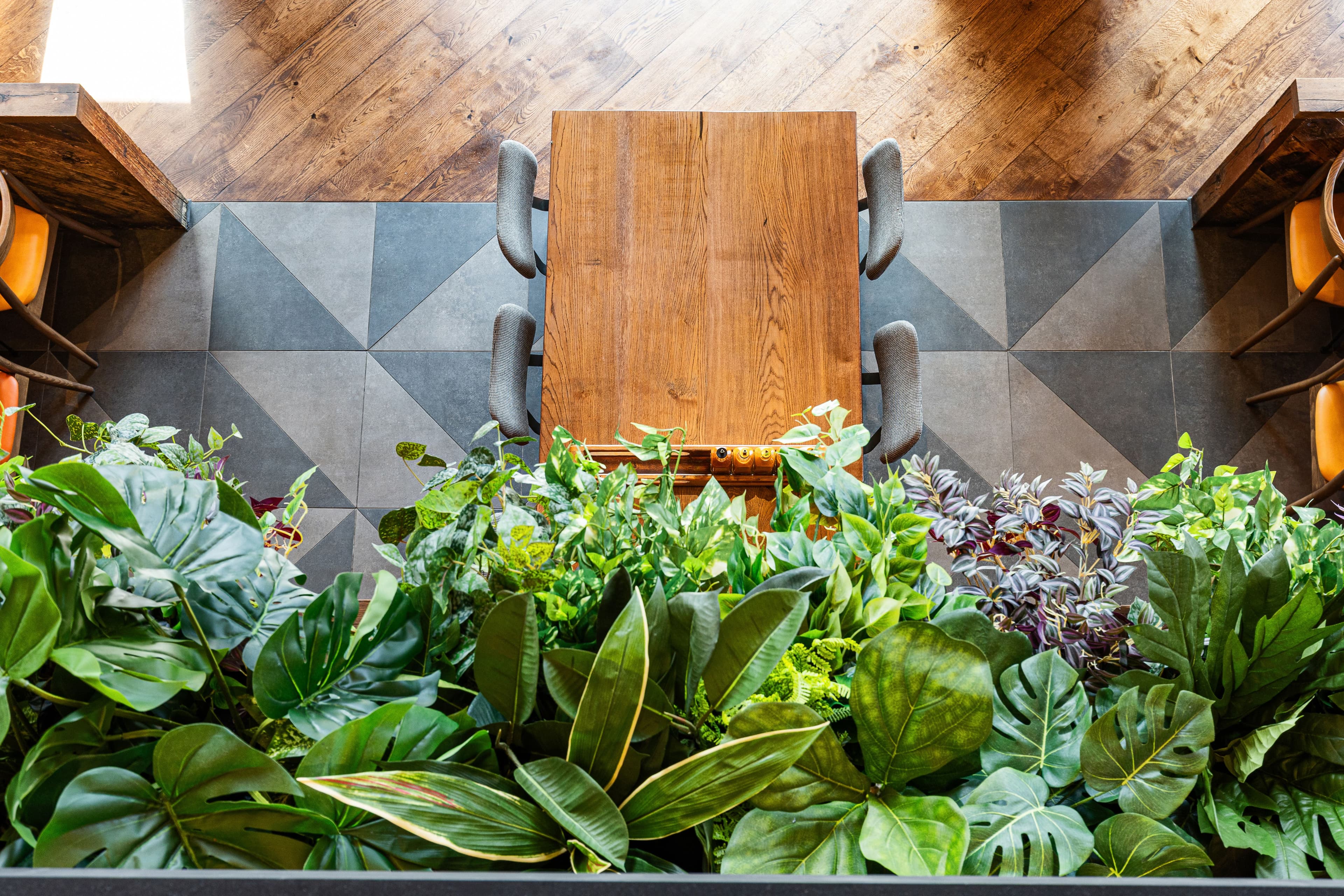
At Tamworth, waterjet-cut components were used to create bespoke geometric floor details. The process allowed the specified shapes and junctions to be produced accurately, helping the contrasting colours meet cleanly and the pattern read consistently across the space.
This precision matters particularly in a design where geometry is integral to the overall narrative. Small variations in angles, proportions or alignment can become increasingly visible as a pattern repeats. Fabricating the components in a controlled environment helps to give the installation team clearly defined pieces with which to realise the intended layout on site.
The finished floor is therefore more than a decorative layer. Its angular forms add energy to the restaurant and sit in dialogue with the patterns found across fabrics, furniture and artwork, helping the interior feel cohesive rather than assembled from separate elements.
From drawing to installation
A successful waterjet-cut tile scheme begins well before fabrication. The design intent, material choice, tile thickness, grout joints, tolerances, setting out and site conditions all need to be considered together.
The process will typically include reviewing the proposed pattern, translating approved information into a suitable cutting layout, assessing how individual components will be produced and identifying the clearest way for the finished pieces to be set out on site. Early coordination is particularly valuable where a pattern meets walls, thresholds, fixed furniture or changes in floor finish.
Material behaviour also needs to inform the design. Porcelain, ceramic, natural stone and other hard surfaces have different characteristics, while very fine points, tight internal angles and narrow sections may require careful assessment. Engaging a fabrication partner early allows the pattern to be refined around both the creative objective and the practical demands of manufacture and installation.
Bespoke detail with commercial purpose
In hospitality design, a memorable interior must also respond to intensive day-to-day use. Bespoke fabrication provides a way to introduce individuality while retaining the practical benefits of a correctly specified tiled surface.
At Nando’s Tamworth, the waterjet-cut floor pattern gives the restaurant a site-specific character without becoming disconnected from the wider material scheme. It shows how a standard tile format can become the starting point for something more individual, and how specialist technical input can support creative ambition from specification through to installation.
The project continues Parkside’s established work with Nando’s and reflects our wider approach as a tile supplier and fabrication partner: combining product knowledge, technical understanding and precision cutting to help designers deliver distinctive commercial interiors.
Developing a bespoke tile pattern?
Whether a scheme calls for a geometric floor, a curved transition, a detailed inset or a completely individual motif, early technical input can help establish what is achievable and how the design can be delivered efficiently.
Speak to the Parkside team about tile specification, pattern development and specialist waterjet cutting for your next commercial project.
Related project:Nando’s Tamworth