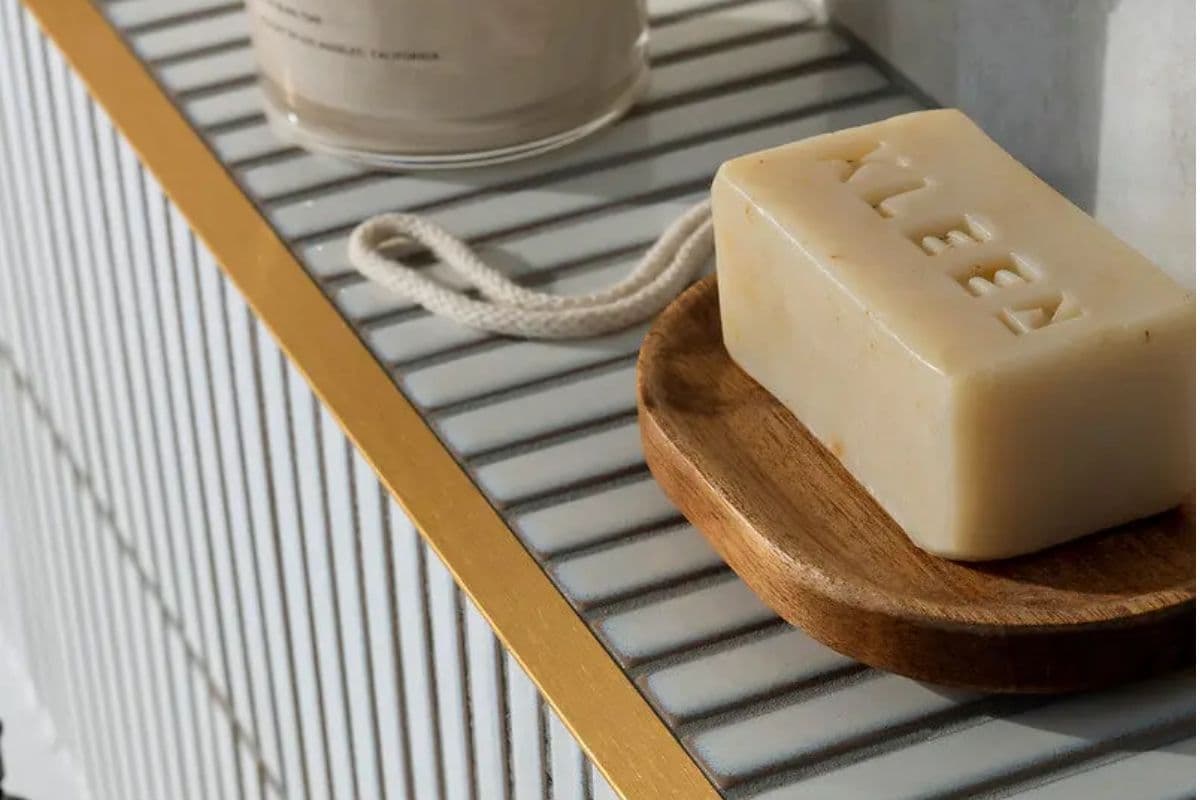
Tile trim is used to finish the raw edge of a tile where it meets another surface, another material or an internal or external corner.
Without a trim, that raw edge is left exposed, which affects both the durability and the appearance of the installation.
This guide covers the main trim types, the materials they're available in, where each is specified and how to choose the right profile for a project.
However, for tailored advice for an upcoming commercial project, please get in touch with the Parkside team.
Why Tile Edges Need Finishing

Shop the look:
The cut or manufactured edge of a tile is more vulnerable than its glazed or polished face. Left exposed, it's prone to chipping, moisture ingress and, on porous tiles, staining along the edge.
A trim protects that edge from impact damage, creates a clean transition where tiling ends or changes direction and gives an installation a finished, considered appearance rather than a raw or unresolved edge.
On large format porcelain, where a single tile spans a significant area, an unprotected edge is also more visually prominent, so trim selection has a greater bearing on the finished result.
Common Tile Trim Types
Different trim profiles exist because they solve different problems: some are designed to finish an exposed edge, others manage movement and others handle the transition between two different surfaces or floor heights. The right type depends on where the trim sits in the installation and what job it needs to do there, rather than being a single interchangeable product.
Straight Edge Trim

Straight edge (quarter round) trim is the most widely specified profile, used to finish an exposed tile edge with a rounded or bullnose-style face. It's typically used where tiling stops partway up a wall, around window reveals, or at the edge of a splashback.
Box Trim

Box trim (square edge) trim gives a flat, squared-off profile rather than a rounded one, suited to a more contemporary or minimalist finish where a crisp line is preferred over a soft curve.
Movement Joint Trim

Movement joint trim accommodates the natural expansion and contraction of a large tiled area, providing a flexible break in the tiling at set intervals so that stress doesn't build up across the whole surface. This works alongside adhesive flexibility; for background on how adhesive itself absorbs movement, see our guide to the different types of tile adhesive.
External Corner Trim

External corner trim wraps around an external corner, such as the edge of a tiled column, plinth or upstand, protecting the two adjoining edges where they'd otherwise meet at an unfinished mitre.
Threshold Trim

Threshold and reducer trim manages the transition between a tiled floor and an adjoining floor covering of a different height, commonly used at doorways where tile meets carpet, wood or vinyl.
Tile-In Trim

Tile-in trim sits flush with the tile surface rather than proud of it, creating a near-seamless transition that reads as part of the tiled surface itself rather than a visible strip.
Trim Materials
Trim is available in aluminium, stainless steel, brass, PVC and chrome and the choice affects both durability and appearance.
Aluminium is lightweight, corrosion-resistant and one of the most widely specified materials for general use, including outdoor applications; Parkside's Everscape range for outdoor porcelain includes coordinated aluminium trims for this reason.
Stainless steel and brass are more commonly specified in commercial or high-traffic settings where the trim needs to withstand repeated impact, or where a decorative metallic finish is part of the design intent, such as the aged brass finish available in the Foundry trims collection.
PVC trim is a lower cost option generally reserved for domestic wet areas with lighter traffic and chrome offers a bright, reflective finish suited to contemporary bathroom specifications.
Matching Trim To The Tile
Trim depth needs to match tile thickness for a flush, professional result; a mismatch leaves either the trim or the tile face proud of the other.
Many Parkside ranges, including Matrix and Regal, are supplied with coordinating trims developed specifically for that tile's thickness and colour palette, which removes the guesswork from matching a generic trim profile to a specific tile.
Where a coordinated trim isn't available for a given range, colour and finish should be matched as closely as possible against the tile and, ideally, the grout colour selected for the project, since trim, tile and grout are usually viewed together as a single finished surface.
Where Trim Is Typically Specified
- Part-tiled walls, where tiling stops below full height and the top edge needs finishing, most commonly with a straight edge trim.
- External and internal corners, particularly on splashbacks and around window reveals, where an unprotected mitred edge would otherwise be exposed to impact.
- Wet areas and bathrooms, including shower enclosures, where trim also helps manage the junction between tiled and waterproofed surfaces. See our bathroom wall tile ideas guide for more on coordinating trim, grout and tile across a bathroom specification.
- Outdoor and exterior tiling, where trim needs to be corrosion-resistant and rated for exposure; our outdoor wall tiles range sets out the wider technical requirements for exterior installations, including adhesive and movement joint spacing.
- Threshold transitions, where flooring changes from tile to another material at a doorway or room boundary.
Installation Considerations

Shop the look:
Trim is bedded into the adhesive alongside the tile itself, not fixed on afterwards, so it needs to be planned into the tiling layout from the outset rather than treated as an afterthought once the tiles are down. Corner returns are typically mitred to 45 degrees for a clean joint and most aluminium and PVC trims are straightforward to cut and mitre on site with standard tools. For guidance on adhesive coverage and how it interacts with trim and movement joints across a full installation, see our tile adhesive coverage guide.
Working On A Commercial Tiling Project? Get Advice From Our Experts
Trim selection is part of a wider specification decision alongside tile, grout and adhesive.
Parkside ranges are supplied with coordinating trims designed specifically for that tile.
For advice on the right trim profile and material for a specific project, get in touch with the Parkside team or browse our full tile range.

