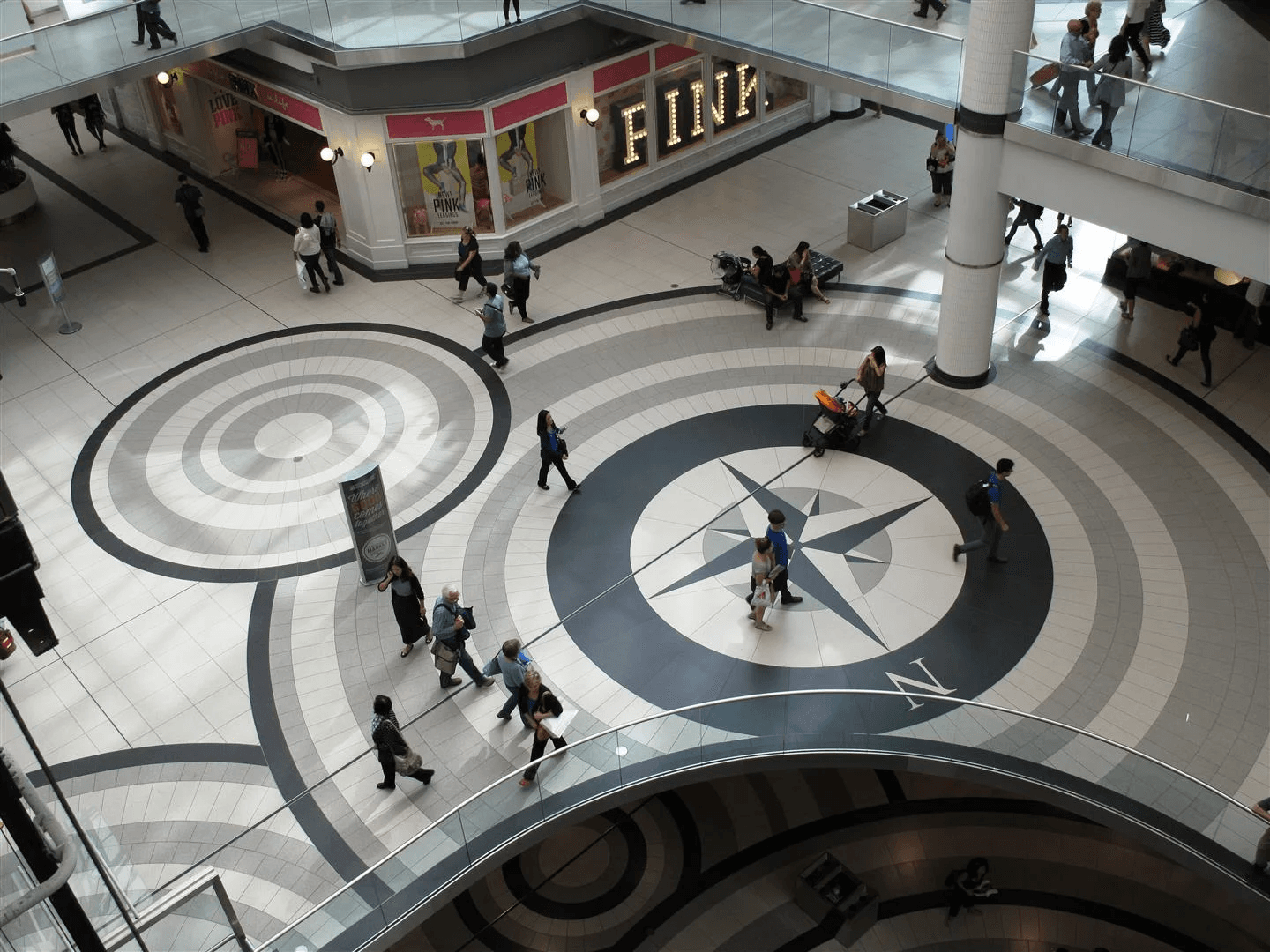
In any busy commercial environment, the building materials and finishes must be compatible not only with high footfall, but also the specifics of how the space will be used.
Beyond ensuring safety compliance, commercial tiles also have an important job in enhancing the aesthetics of your premises. With so many factors to consider, selecting tiles for commercial settings can't be done on a whim.
Parkside is a leading UK manufacturer of commercial tiles for high traffic environments.
We’re here to share our project expertise, including supplying tiles for the likes of retail stores and major transit hubs, to guide you on suitable floor tile choices for high traffic commercial spaces.
Slip Resistance
We have to start this guide with slip resistance, since it’s arguably one the most important factors for commercial tile installations. In high traffic routes especially, there is an even greater risk of spills and surface contamination, which could lead to slips and trips.
The slip resistance of tiles is defined by PTV ratings. Different areas of a building will have different PTV ratings that need to be met within the choice of flooring.
As a general guide, entrance areas and corridors should achieve a PTV of 36 or above (low slip risk), with 45+ recommended for wet-prone zones.
R-ratings (DIN 51130) are also relevant for commercial kitchens and food production environments, where R10 to R13 is standard practice.
Even if the tile meets every other specification for your project, if it doesn’t have the required slip resistance for the environment, it creates a legal liability. For this reason, expert guidance is needed to ensure compliance.
Wear Resistance (PEI Rating)
Although what defines a high traffic environment can vary (i.e. retail stores, transport hubs, hospitality venues or healthcare settings), the one thing that remains constant with all high traffic flooring is that it will be subject to lots of wear.
This wear comes from high volumes of people walking over the surface, but it can also be due to wheeled loads such as trolleys, suitcases, stock movement or maintenance vehicles which also cross the floor.
The wear resistance of a tile is defined by its PEI rating. The ratings range from 0 to 5, with the higher numbers denoting increased durability. For instance, tiles with a PEI 0 rating wouldn’t be suitable for use on floors, which is why this rating classification is often found in wall tiles where foot traffic isn’t accounted for.
For high traffic commercial environments, PEI Class 5 is the minimum practical standard, as this top rating indicates suitability for the most demanding foot traffic conditions.
Impact Resistance
Another thing that should be expected in a busy commercial space is impacts. This could range from a customer dropping an item on the floor in a retail store to other types of impacts, such as trolley impacts. Heavy footfall in itself also generates repeated mechanical stress on flooring.
Thick-format porcelain (typically 20mm pavers for external or industrial applications) offers greater resilience. However, standard 10mm tiles perform well internally where the substrate is properly prepared.
Abrasion & Scratch Resistance
In commercial tile specification, we use something called the Mohs scale to measure a tile's surface resistance to scratching. The Mohs scale runs from 1 (softest) to 10 (hardest).
For high traffic commercial environments, we recommend that a tile has a Mohs rating of 7 or above. That’s because there are many factors which can cause scratches or abrasions on floor tiles, especially when they are subject to heavy footfall.
Grit tracked in by footwear is one such example. It’s the type of thing that might seem like a non-event, but if the floor surface scratches easily, the look of the floor can quickly degrade.
Porcelain tiles with a through-body or a matt finish outperform polished or glazed surfaces in this respect.
Tile Format & Joint Width
Joint width and depth should be specified to match the commercial environment to avoid premature failure.
Larger format tiles reduce the number of grout joints, which lowers maintenance burden and trip hazard risk in busy thoroughfares. However, very large formats require an exceptionally flat substrate. Lippage must be controlled carefully, particularly where wheeled traffic is involved.
In commercial environments where hygiene and bacteria are of particular concern (i.e. healthcare, food service or washrooms), large-format tiles with fewer grout lines reduce bacteria traps.
Of course, lying between each tile is the grout. The choice of grout also needs to be considered in every tiling project.
For instance, standard cementitious grouts deteriorate quickly under heavy use. However, epoxy grouts offer significantly greater resistance to staining, chemical cleaning agents and physical wear, which makes them the preferred choice for high traffic and food service environments.
The correct flexible adhesive classification (C2 or above under BS EN 12004) and thorough subfloor preparation are essential. Movement joints must be incorporated in accordance with BS 5385.
Chemical & Cleaning Agent Resistance
Commercial environments, especially those accessed by employees or the general public, require very regular cleaning. Not only that, but the types of cleaning agents and tools will be of industrial grade, which often makes cleaning processes more abrasive.
Tiles and grouts must resist degradation from detergents, sanitisers and floor strippers without resulting in surface pitting or colour change. This is particularly relevant in healthcare, food retail and education settings, where the cleanliness of the building is of the utmost importance for safety and reputational management.
Also, in spaces where hot cleaning equipment, such as steam cleaners, is used regularly, tiles must be able to withstand rapid temperature changes without cracking or delaminating.
Water Absorption
In some commercial environments, a high exposure to moisture is expected. Examples include washrooms, entrance lobbies or kitchens.
Tiles should have a water absorption rate of less than 0.5%, classifying them as impervious. This also affects frost resistance for external applications.
Aesthetic Alignment With Brand And Sector
Commercial tiles offer a wide range of aesthetic options that allow designers to create visually appealing and functional spaces. Tiles are available in numerous colours, patterns and textures, making it easy to match different interior styles, from modern and minimalist to traditional and decorative.
Finishes such as matt, glossy or textured surfaces can influence the overall look and feel of a space, while larger format tiles can create a sleek, seamless appearance.
In addition, commercial tiles can replicate the look of natural materials like stone, wood or concrete, providing the desired visual effect while maintaining durability and ease of maintenance. These aesthetic choices enable businesses to design spaces that reflect their brand identity while remaining practical for high traffic environments.
Acoustic Performance
In open-plan offices, retail and hospitality environments, hard tile surfaces can significantly increase reverberation. Specifiers may need to account for this within a broader acoustic strategy.
Compliance With Building Regulations
Considering key factors like tile slip-resistance already helps make commercial tiles more compliant with the various health and safety requirements that exist.
However, every commercial building can have specific regulations owing to the types of risks that may be present in the particular setting. For this reason, any regulations that apply should always be checked to ensure all material choices, including wall or floor tiles, meet the requirements.
Generally speaking, tile selection must align with Part M of the Building Regulations (access and use), particularly in public facing spaces. Contrast between floor and wall tiles may also be required to assist those with visual impairments.
Sustainability
Sustainable tiles are becoming increasingly popular within commercial projects, particularly those looking to achieve BREEAM certification or meet ESG commitments.
Recycled content, responsibly sourced materials and low-emission adhesives and grouts can all improve the environmental credentials of a commercial tiling project.
Parkside Tiles - Ask Our Experts About Tile Specifications Needed For Your Commercial Environment
At Parkside, we collaborate on architectural and design projects across the UK, including for a range of different commercial building types.
Our tile experts can help you select tiles for your project that will meet all of your required specifications for safety, practicality and aesthetics.
Discover our vast range of commercial wall tiles or floor tiles on our website.
For help or advice on anything we’d mentioned above, please get in touch or call us on 0116 276 2532.
We also invite you to visit our design studios in person. These are located across the UK in London, Manchester, Leicester and Glasgow.

